In this guide
Quick answer
For construction in Abu Dhabi you mostly need five types of sand. Black (washed) sand for concrete, block mortar and outside plaster. White sand for inside plaster and fine finishing. Dune sand (Dafan) and gatch for filling and levelling plots. Red sweet sand for gardens. 3/16 crushed stone under interlock pavers. Desert dune sand and red sand are never used in concrete or plaster.
Most delays we see on site start with one word on WhatsApp: “sand”. A mason waiting for plaster sand receives filling sand. A villa owner orders red sand for a driveway and the pavers sink after the first summer. The material was fine. It was the wrong type for the job.
This guide explains the types of sand for construction that you can actually buy in Abu Dhabi, what each one is for, and how to order the right one the first time. It is written from what we load at our yard in Mafraq Industrial Area every day, so the names match what suppliers and truck drivers use in the UAE.
Why the Right Sand Matters on a UAE Site
The right sand matters because UAE desert sand has fine, round, salty grains that cement cannot grip. In plaster it causes hairline cracks and hollow patches, and in concrete it gives weak slabs and rusting steel. Construction sand is washed or crushed, with sharp, mixed grains and most of the clay and salt removed.
The UAE is full of sand, yet builders here buy sand by the truck. The reason is the grain. Desert sand is blown by wind for thousands of years, so the grains are very fine and round, almost like small balls. Cement cannot grip round grains well, and the fine dust and salt in desert sand weaken concrete and plaster. We explain this in full in our guide on whether desert sand can be used for concrete.
Construction sand is different. It is washed or crushed, the grains are sharper and mixed in size, and the clay and salt are mostly gone. That is why the types of sand in UAE price lists carry names like black sand, washed sand or white sand, and why you should never mix them up.
- Wrong sand in plaster: hairline cracks, hollow sound when you knock the wall, and plaster that falls off in patches.
- Wrong sand in concrete: weak slabs and footings, more cement needed, and rusting steel over time.
- Wrong sand under pavers: uneven driveways, puddles and tiles that rock when a car drives over them.
- Wrong sand for filling: paying for washed sand where cheap filling sand would do the same job.
Types of Sand for Construction at a Glance
The main types of sand for construction in Abu Dhabi are black sand (washed or crushed, for concrete, mortar and outside plaster), white sand (inside plaster and fine finishing), white sand mix (general work and levelling), dune sand or dafan (plot filling), red sweet sand (gardens) and 3/16 crushed stone (bedding under pavers).
Here are the main types of sand for construction in Abu Dhabi, with the names you will hear on site. Use the last column as your check before you order.
| Sand type | Also called | Grain and look | Use it for | Do not use it for |
|---|---|---|---|---|
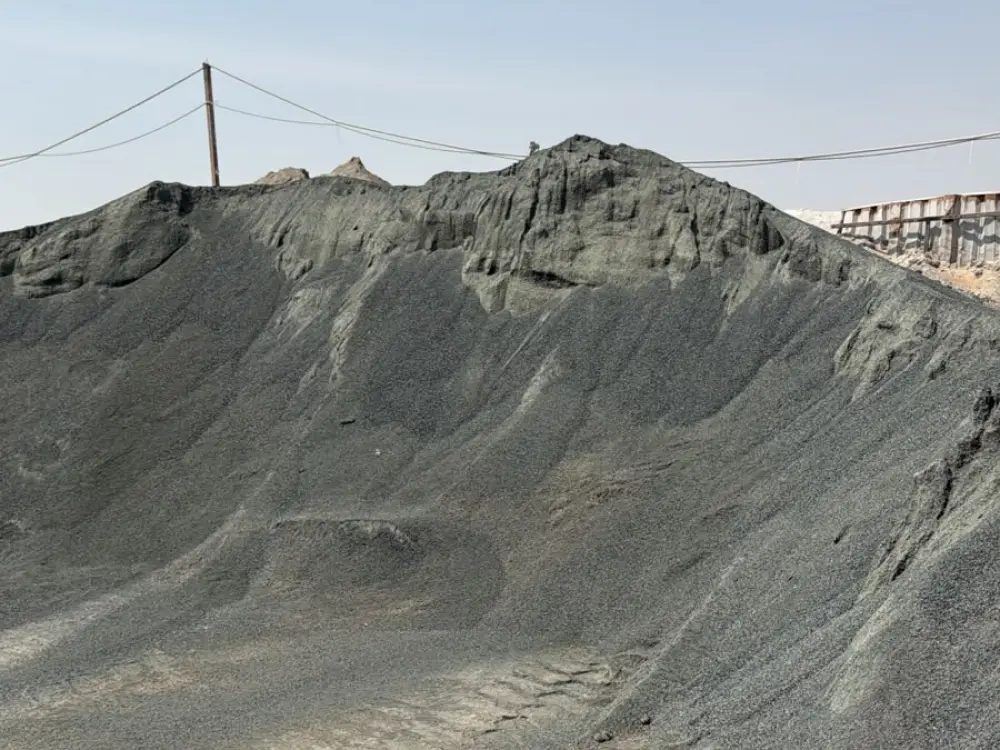
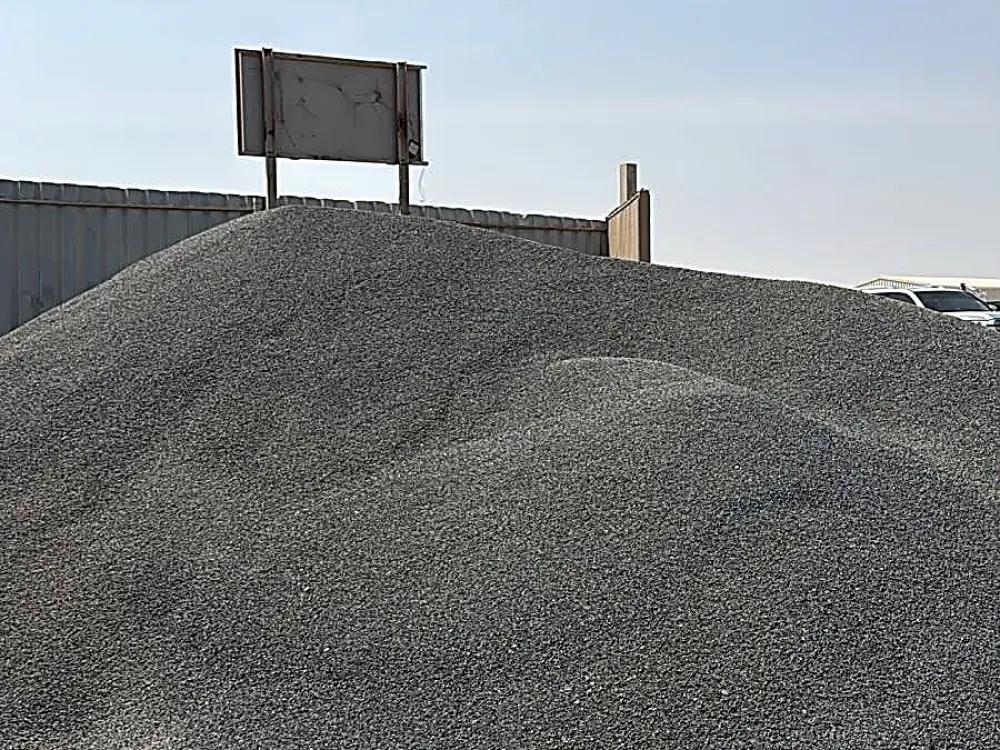
| Black sand | Washed sand, plaster sand, concrete sand | Dark grey, sharp, mixed grain | Concrete, block mortar, outside plaster, screed | Gardens, play areas |
| White sand | Fine white sand | Light colour, fine and clean | Inside plaster, blockwork, fine finishing | Structural concrete on its own |
| White sand mix | Mixed white sand | Light, mixed grade | General building work, backfill, levelling | Fine finishing plaster |
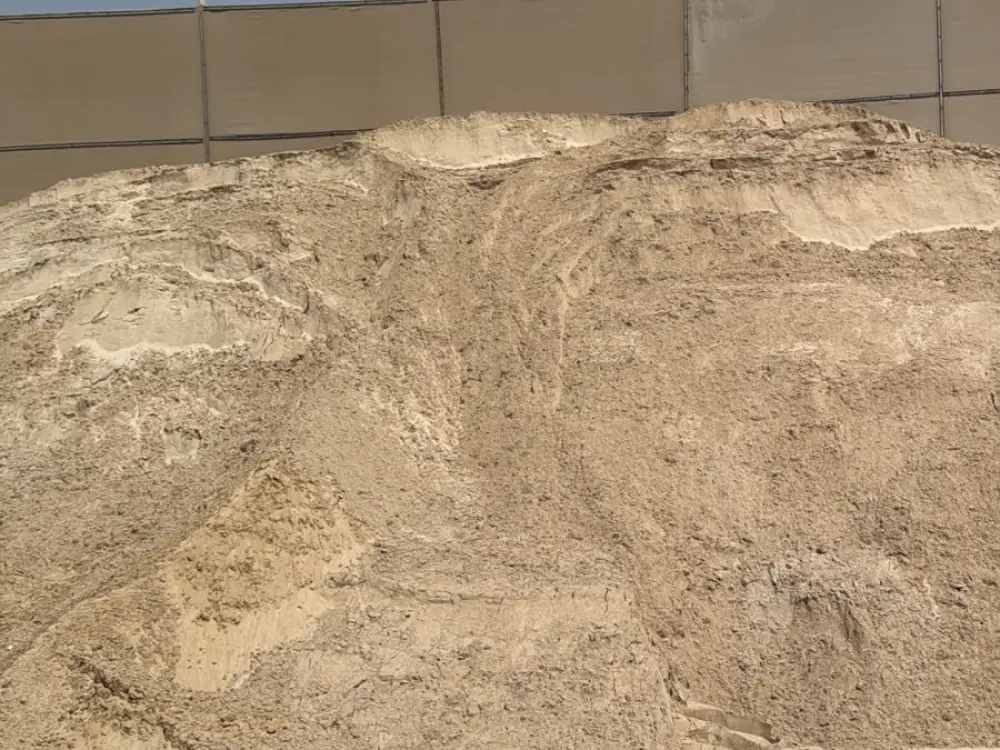
| Dune sand | Dafan, filling sand, desert sand | Very fine, round, light brown | Raising plot levels, backfill behind walls | Concrete, plaster, mortar |
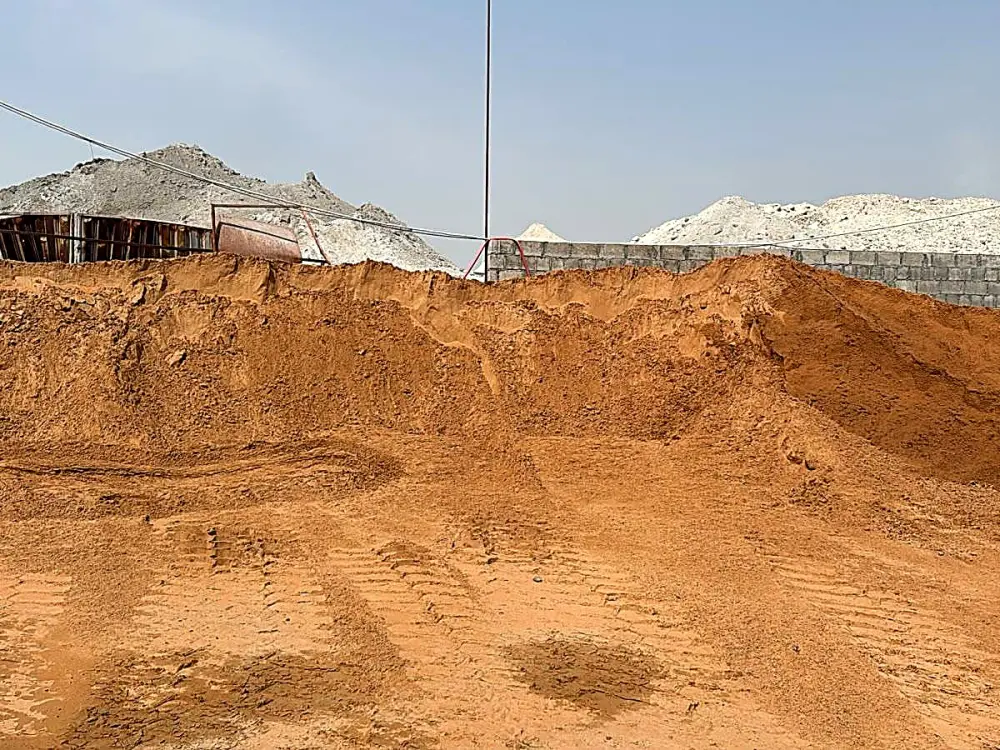
| Red sand | Sweet sand, Hubaili, garden sand | Reddish, soft, holds water | Garden beds, lawns, planting areas | Concrete, plaster, paver bedding |
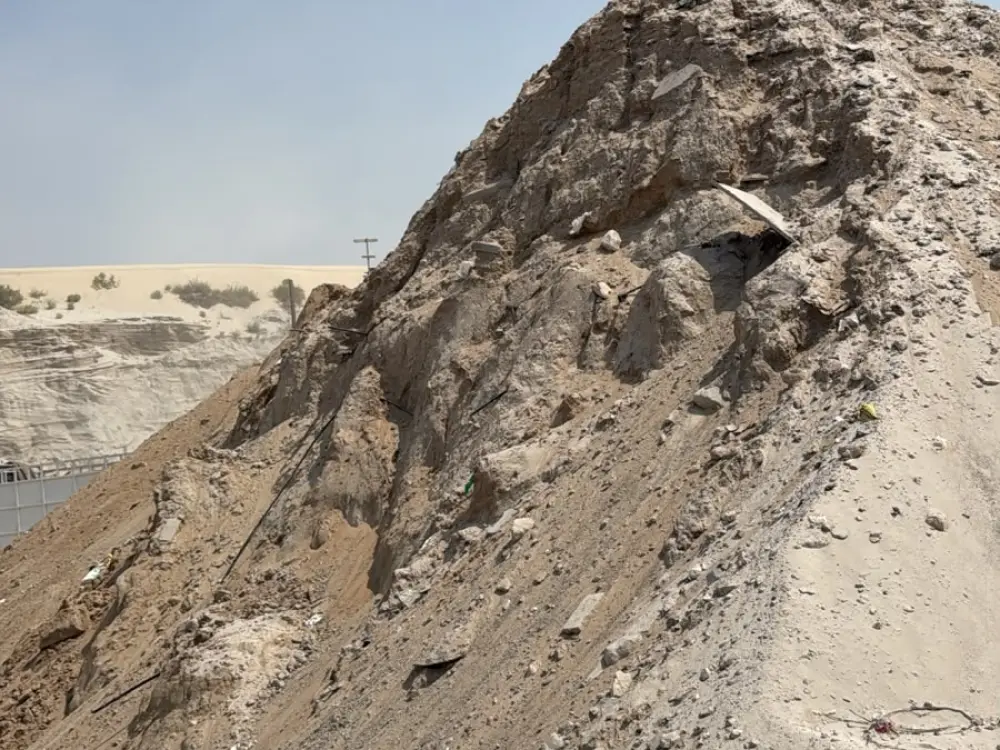
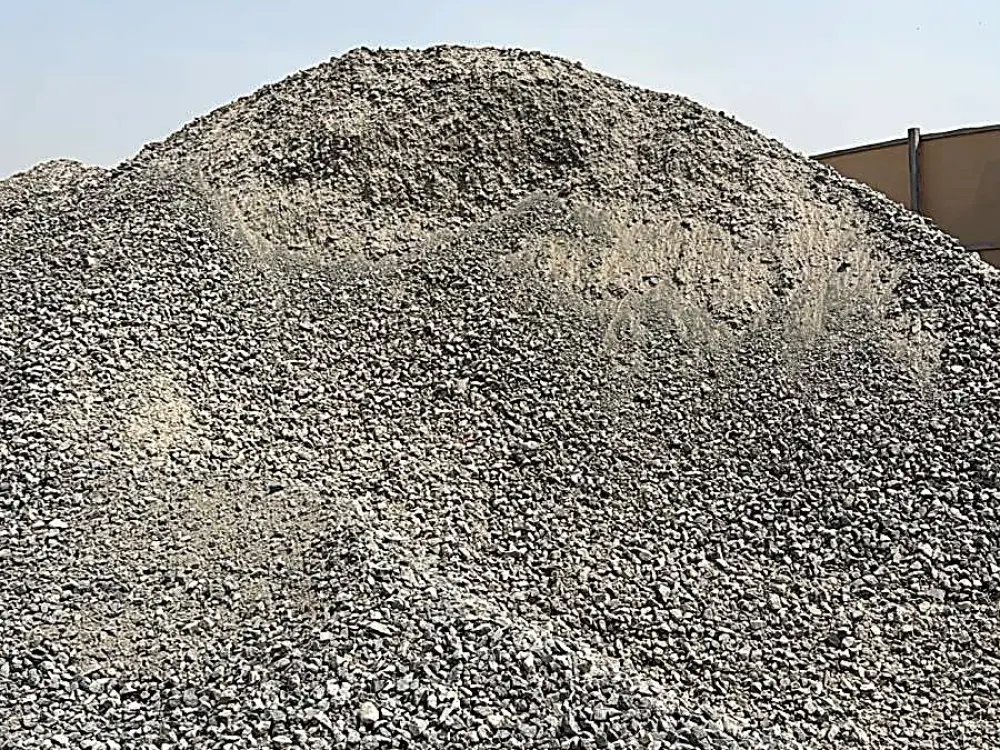
| Gatch | Gutch material, gatch soil | Natural mix of sand, clay and stone | Levelling plots, layers under slabs and yards | Concrete, plaster |
| Sevhan sand | Natural sand | Natural, mixed grain | Backfill, landscaping, levelling | Fine plaster |
| 3/16 crushed stone | 5 mm aggregate, interlock bedding | Small sharp crushed stone | Bedding under interlock pavers, screeds | Plaster |
Which Sand for Which Job
Use black sand for outside plaster, block mortar and concrete with 3/4 or 3/8 aggregate, white sand for a smooth inside plaster coat, dune sand (dafan) to raise plot levels, gatch or road base for driveways and yards, 3/16 crushed stone under interlock pavers, red sweet sand for gardens and clean white sand for play areas.
Start from the job, not the sand name. Below is what we recommend for the jobs customers ask us about most.
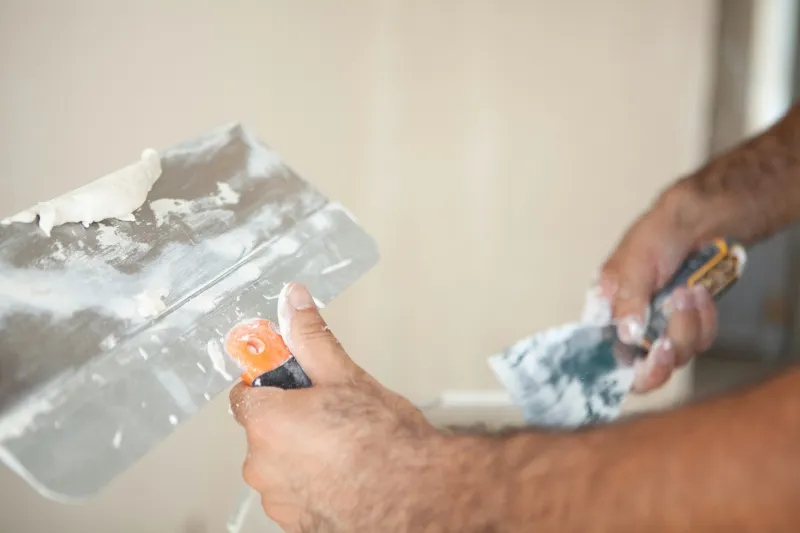
Plastering walls
For outside walls, boundary walls and anything exposed to sun and humidity, use black sand. Its sharp grains give a stronger bond and resist cracking. For inside walls where you want a smooth, fine finish, masons often prefer white sand. Many villa sites use both: black sand for the first coat and outside work, white sand for the final inside coat.
For a bright white finish on decorative work or tile joints, the sand goes with white cement instead of grey cement.
Concrete for slabs, footings and columns
Concrete needs washed black sand plus crushed stone. For most villa slabs and footings that means black sand with 3/4 inch (20 mm) aggregate, and 3/8 aggregate (10 mm) for thinner sections and block making. Dune sand and red sand have no place in concrete, even as a small part of the mix.
Common mistake
Never “stretch” a concrete mix by adding cheap dune sand. The fine round grains need more water and more cement, and the concrete ends up weaker than if you had used less sand.
Blockwork mortar
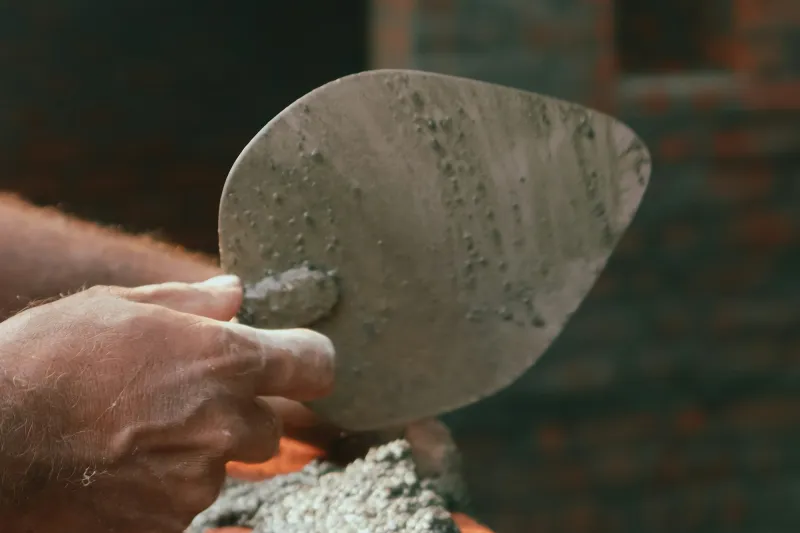
For laying a hollow block or solid block wall, the mortar sand is usually black sand. Some masons use white sand for inside partition walls. As a rough guide, about 1,000 blocks need around 2.5 to 3 tons of mortar sand, depending on joint thickness.
Materials for plaster, concrete and blockwork


Filling and raising plot levels
New villa plots in Al Shamkha, Riyadh City and Al Falah often sit lower than the road. To raise the level or fill behind boundary walls, use dune sand, known on site as Dafan or filling sand. It is the lowest cost sand and comes in full 6 wheel and trailer loads.
Under slabs, yards and areas that will carry weight, many contractors use gatch material instead, because its mix of sand, clay and stone packs down harder than pure sand.
Driveways, yards and site roads
This job does not need sand at all. A driveway or parking area needs a firm base of road base, which is crushed stone with fines that locks together when it is compacted. Sand on its own moves and washes out.
Interlock pavers
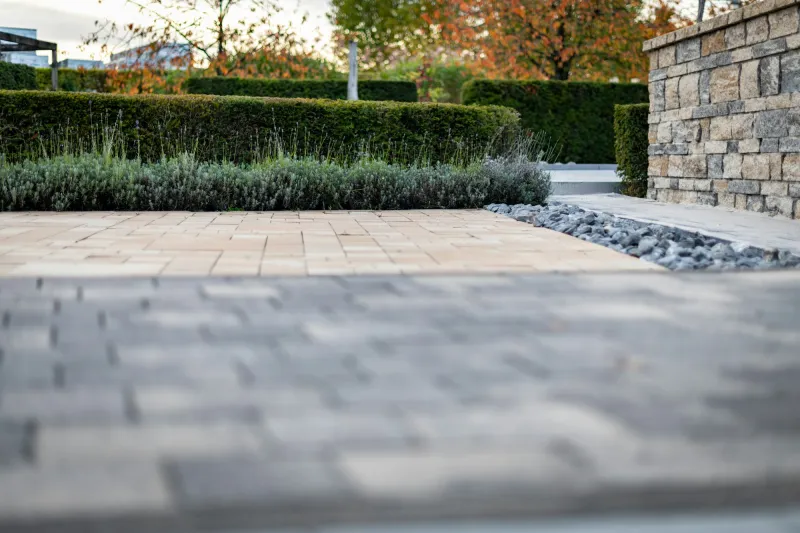
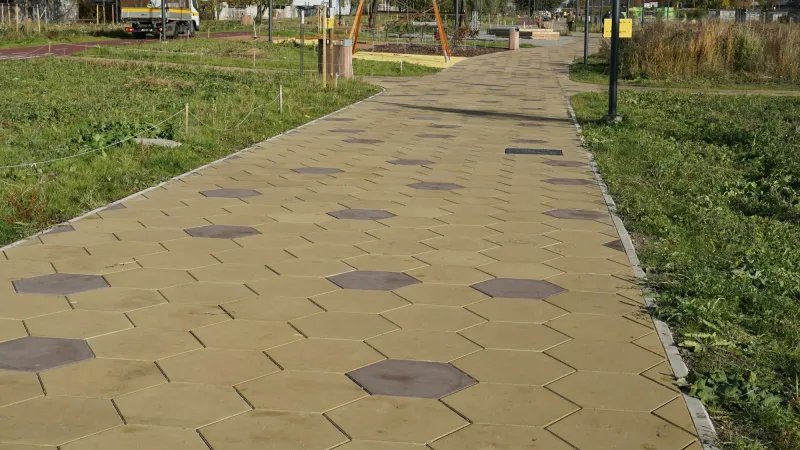
Pavers sit on a thin bedding layer of 3/16 aggregate (about 5 mm crushed stone) laid over road base. After the pavers are placed, fine dry sand is brushed into the joints. Our interlock sand page explains both layers. Red sand or soft garden sand under pavers is the most common reason driveways sink.
Gardens, lawns and planting beds
For villa gardens, the sand of choice is red sand, also called sweet sand or Hubaili. It is soft, holds water better than washed sand and plants grow well in it. Most gardeners mix it with compost or soil for flower beds, and lay a layer under new grass.
Children’s play areas
Ask for clean white sand and tell us it is for a play area, so the load comes from a clean, fine pile. Do not use black sand or gatch, which are rough and dusty for bare feet. Our guide to the best sand for a kids play area has the full picture.
How to Tell the Sand Types Apart on Site
You can tell sand types apart on site without tools: black sand is dark grey and gritty, white sand is light and even, red sand is reddish and soft, and dune sand is light brown and powdery. A damp handful that stains your palm or sticks like dough has clay or silt, which is wrong for plaster or concrete.
When the truck arrives, a quick look and feel tells you if you received the right type. You do not need any tools.
- Look at the colour. Black sand is dark grey. White sand is light and even. Red sand is clearly reddish. Dune sand is light brown and very fine.
- Rub a pinch between your fingers. Construction sand feels sharp and gritty. Dune and red sand feel soft and smooth, like powder.
- Squeeze a damp handful. If it leaves a brown stain on your palm or sticks together like dough, there is a lot of clay or silt in it. That is normal for red sand and gatch, but not for plaster or concrete sand.
- Check the pile. A good load looks the same from top to bottom, with no lumps of clay, roots or rubbish.
Site tip
Ask us for a photo of the load on WhatsApp before the truck leaves the yard, so you see the sand before it reaches your site.
Common Mistakes When Ordering Sand
The most common sand ordering mistakes are asking for sand without naming the job, using cheap filling sand in plaster or concrete, booking a trailer for a narrow villa street or a pickup for plot filling, forgetting Abu Dhabi truck ban hours, and ordering every material on one day instead of stage by stage.
- Ordering “sand” with no job. Always say what the sand is for. The same word covers six different materials.
- Using filling sand to save money in plaster or concrete. The saving disappears when you redo cracked plaster.
- Ordering the wrong truck. A trailer cannot enter many villa streets. A pickup is too small for plot filling. Check the size before you book.
- Forgetting the truck ban. Heavy trucks cannot drive on Abu Dhabi city roads at peak hours, so a late booking can push delivery to the next slot.
- Ordering everything on one day. For a villa extension, order filling and gatch first, then black sand, aggregate and blocks when the foundation work starts.
How to Order the Right Sand in Abu Dhabi
Ordering takes a few minutes on WhatsApp. Send us these five things and we do the rest:
- The job: plaster, concrete, blockwork, filling, pavers or garden.
- The size: length, width and depth of the area, or the number of blocks. Our sand calculator gives you the tons, and our guide on how much sand you need shows the method job by job.
- The site location: a pin or the plot number. We deliver across the emirate, including Mussafah, Al Shamkha and Al Ain.
- Street access: tell us if the street is narrow, so we send a pickup or 6 wheel truck instead of a trailer.
- The day you need it: we plan the delivery slot around the truck ban hours.
There is no minimum order. We deliver one pickup for a small repair or many trailers for a full plot. If you still are not sure which sand you need, send a photo and ask. As a sand supplier in Abu Dhabi, we would rather spend two minutes on the right advice than deliver the wrong load.