In this guide
Quick answer
Interlock pavers sink because of what is under them, not the pavers themselves. The usual causes are a sub base that was never compacted, soft sand used as the bedding layer instead of 3/16 crushed stone, water from AC drains or irrigation washing the bed away, and missing kerbs at the edges. The fix is to lift the pavers, rebuild the base with compacted road base and a 30 to 40 mm bed of 3/16, relay them and refill the joints.
A new interlock driveway looks perfect on handover day. A year later there is a dip where the car parks, a hollow by the garden tap and a row of pavers that rocks when you step on it. We hear about it from villa owners across Abu Dhabi every month, usually with a photo and the question: “Can this be fixed, or do I redo everything?”
The good news is that sinking pavers can almost always be reused. This guide explains why interlock tiles sink, how to tell which cause you have, and exactly which materials you need to fix it properly so it does not come back.
Why Do Interlock Pavers Sink?
Interlock pavers sink when the layers under them move. The most common reasons in the UAE are an uncompacted or too thin road base, a bedding layer of soft red or dune sand instead of 3/16 crushed stone, water washing the bed out, and no kerb or edge to hold the pavers in place.
Each of these leaves a different pattern on the surface. Knowing the pattern tells you what to fix.
| What you see | Likely cause | What to fix |
|---|---|---|
| Wide dip where the car parks | Road base too thin or not compacted, pavers too thin for cars | Thicker compacted road base, 80 mm pavers |
| Hollow near a tap, AC drain or planter | Water washing the bedding away | Redirect the water, rebuild the bed with 3/16 |
| Edges dropping and gaps opening | No kerb or edge restraint | Set a concrete kerb, relay the edge rows |
| Pavers rocking all over | Soft sand bed or bed laid too thick | Replace bed with 30 to 40 mm of 3/16 |
| Long narrow dip in a line | Pipe or cable trench not compacted | Dig out, refill in layers, compact |
| Weeds and sand washing out of joints | Joints never filled or washed empty | Brush in fine dry joint sand, compact |
The Correct Base Under Interlock Pavers
A lasting interlock base in Abu Dhabi has four parts: firm natural ground, 150 mm of compacted road base for paths or 200 to 250 mm for driveways, a 30 to 40 mm compacted bed of 3/16 crushed stone, and the pavers with fine dry sand brushed into the joints. Concrete kerbs hold the edges.
- Sub base: road base, laid in layers and compacted with a plate compactor or roller. This carries the weight.
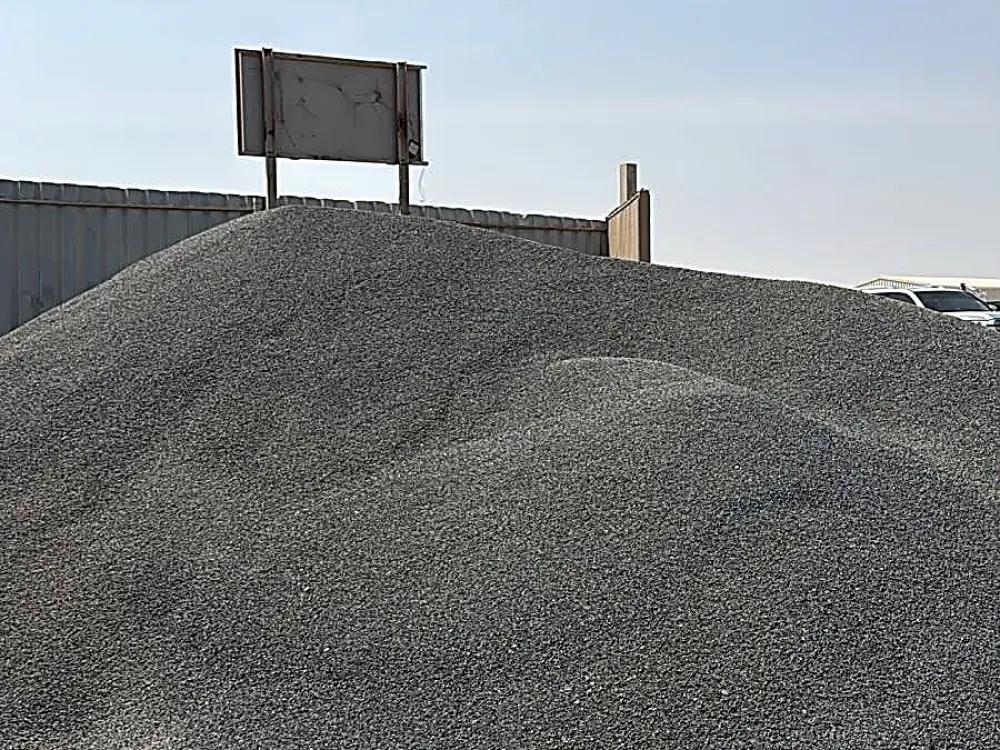
- Bedding layer: 3/16 aggregate, about 5 mm crushed stone, screeded 40 to 50 mm loose so it settles to 30 to 40 mm.
- Pavers: 60 mm for walkways and patios, 80 mm where cars drive or park.
- Joints: fine dry sand brushed in and compacted, so the pavers lock together.
Our interlock sand page explains the bedding and joint materials in more detail.
Is Sand Good Under Interlock Pavers?
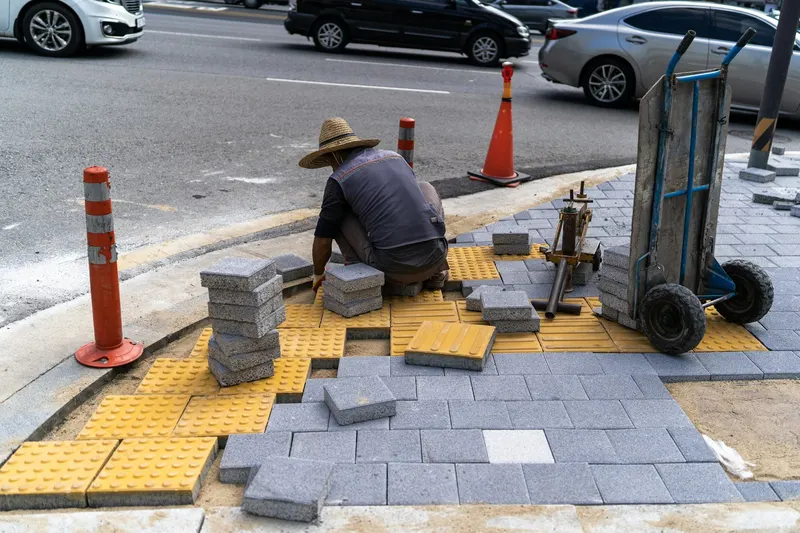
Soft sand is not a good bed under interlock pavers. Red sweet sand and dune sand are fine and round, hold water and move under load, so pavers laid on them sink and rock. Use 3/16 crushed stone for the bed and keep fine sand only for brushing into the joints after the pavers are laid.
Many cheap jobs use whatever sand is on the plot because it is free and easy to level. It looks fine for a few months, then the first heavy rain or a leaking garden hose washes the fine sand into gaps and the surface starts to move. Crushed stone has sharp grains that lock together and let water drain through without washing away.
How to Fix Sinking Interlock Pavers
To fix sinking pavers, lift the pavers in the affected area and stack them for reuse, remove the old bedding, check and compact the road base and add more where it is low, lay a new 40 to 50 mm loose bed of 3/16, relay the pavers, brush in joint sand and compact the surface.
- Mark the area. Go one or two rows beyond the visible dip, so the repair blends in.
- Lift and stack the pavers. Most pavers can be reused. Number the edge pieces if they were cut.
- Remove the old bed. Take out any soft sand, mud or washed out material.
- Fix the cause. Redirect AC drains and irrigation, set a kerb at loose edges, or dig out a soft trench.
- Rebuild the road base. Add road base in layers of about 75 mm and compact each one until the level is right.
- Lay the 3/16 bed. Spread 40 to 50 mm loose and screed it flat with a straight board. Do not walk on it.
- Relay and lock. Lay the pavers tight, brush fine dry sand into the joints and run a plate compactor over the surface. Top up the joint sand and compact again.
Site tip
Repairs are much cheaper when the materials are on site before the pavers are lifted. Order the road base and 3/16 a day ahead so the area is not left open overnight.
How Much Material Do You Need for the Repair?
For each 10 m² of repair, plan on about 0.6 to 0.7 tons of 3/16 for a new bed and, if the base needs rebuilding, about 1.5 tons of road base for every 75 mm layer. A typical villa driveway repair of 20 to 30 m² fits on one or two pickups.
| Repair area | 3/16 bed (40 to 50 mm loose) | Road base (75 mm top up) | Typical delivery |
|---|---|---|---|
| 10 m² | About 0.7 tons | About 1.5 tons | One pickup |
| 30 m² | About 2 tons | About 4.5 tons | Two pickups |
| 100 m² (full driveway) | About 6 to 6.5 tons | About 15 tons | One 6 wheel truck |
For a full new driveway, the base is thicker. Our guide on how much sand you need covers new paving from scratch.
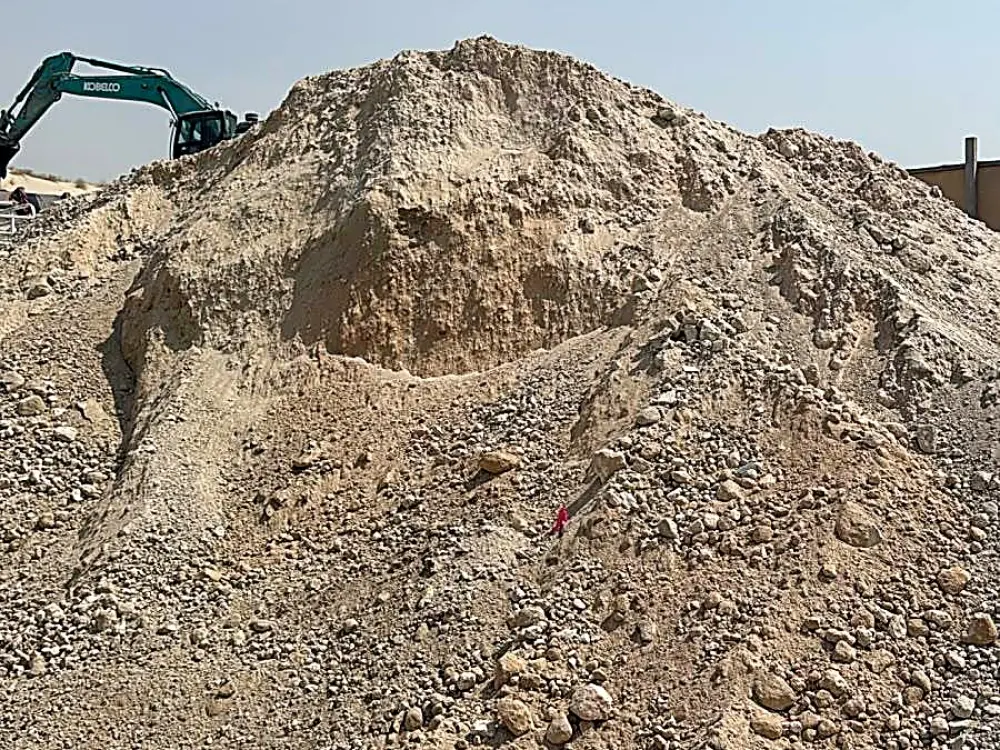
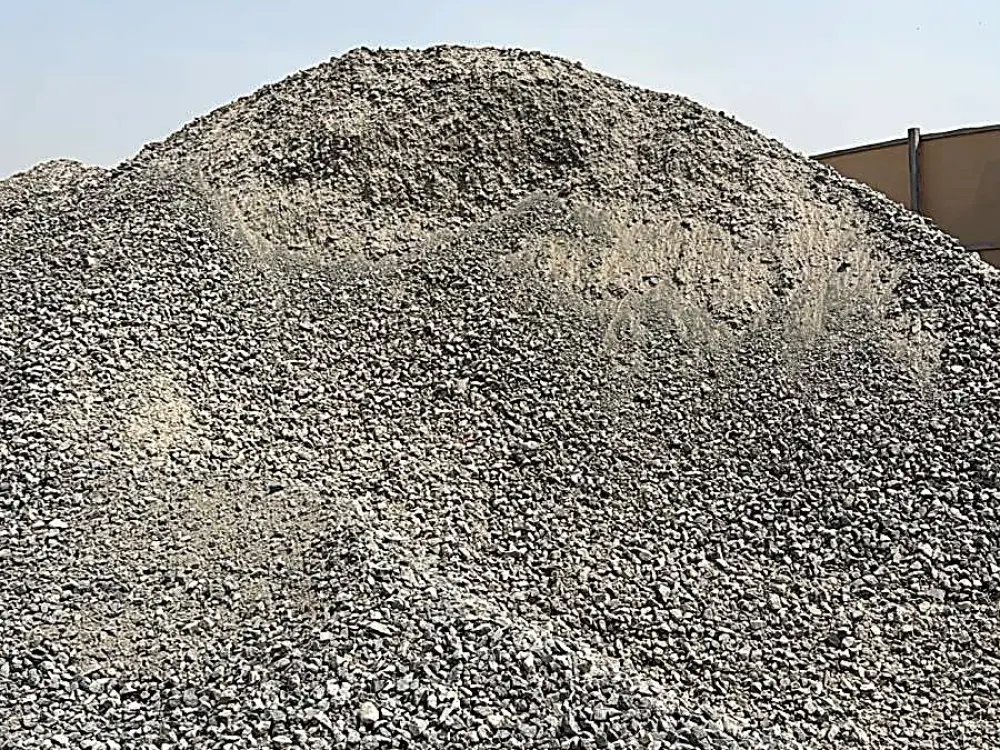
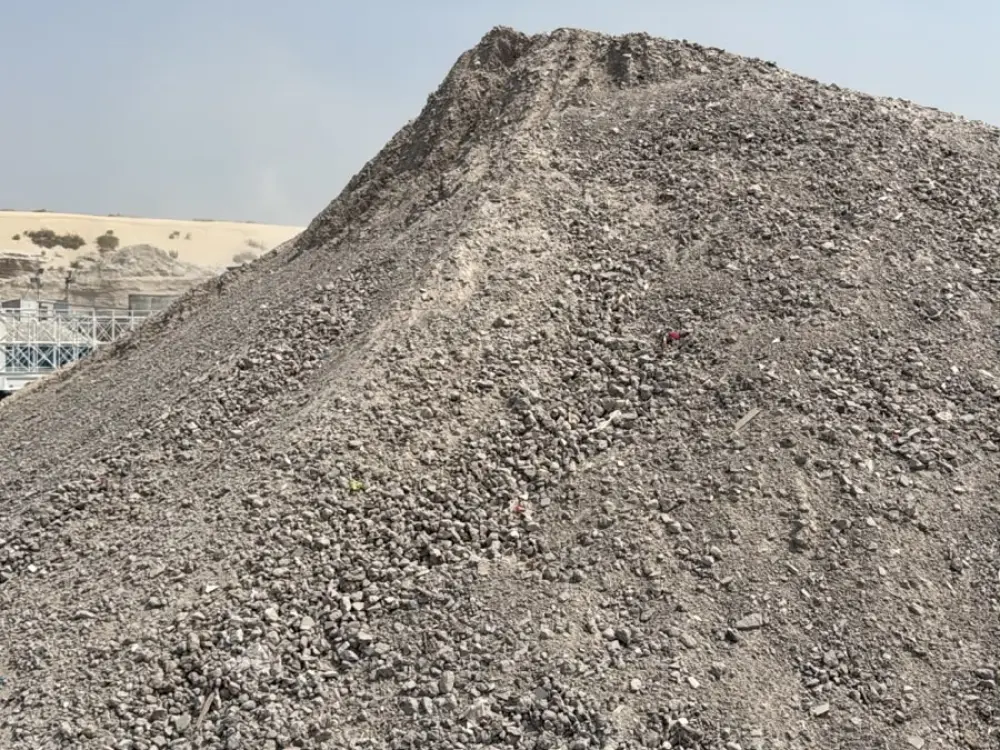
Materials for interlock repairs


How to Stop Pavers Sinking Again
Stop pavers sinking again by keeping water away from the base, using 80 mm pavers where cars drive, keeping the joints full of sand, and setting firm kerbs on every open edge. Check after the first heavy rain and top up any joints that have washed out before the bed underneath starts to move.
- Point AC drains and gutters away from the paving, or into a gravel soakaway.
- Keep irrigation off the paving. Drip lines and sprinklers next to interlock slowly wash the bed out.
- Top up joint sand once or twice a year, especially after pressure washing.
- Do not park heavy vehicles such as water tankers or skips on 60 mm walkway pavers.
- Compact trenches properly whenever a plumber or cable team digs under the paving.
Who Does What
We supply and deliver the materials for interlock repairs and new paving: road base, 3/16 bedding stone and joint sand, in any quantity from one pickup. Lifting, compacting and relaying the pavers is done by your paving contractor or landscaper, who can order directly from us or ask you to have the material ready on site.
Ordering Interlock Repair Materials in Abu Dhabi
Send us a photo of the sunken area, the rough size and your location on WhatsApp. We reply with how much road base and 3/16 you need, the right truck for your street and today’s price, and deliver across the emirate with no minimum order.
We deliver to villas and yards in Al Shamkha, Mussafah, Al Ain and every other area of the emirate. Laying artificial grass next to the paving? Read what to put under artificial grass. For every other material, we are a sand and gravel supplier in Abu Dhabi loading from Mafraq Industrial Area every day.